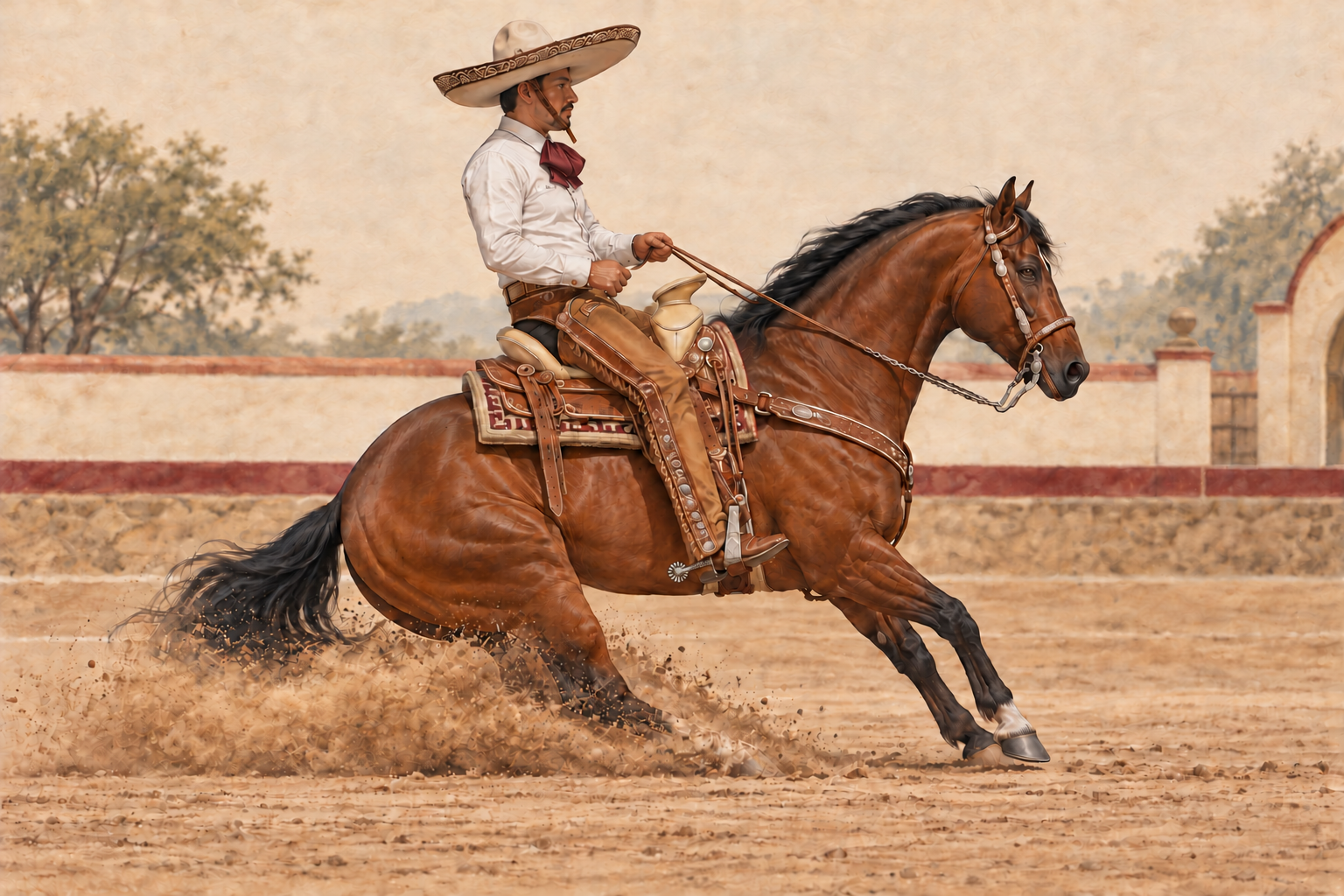
Cala de caballo
Cala de caballo demonstrates the horse’s training and responsiveness through the punta (sliding stop), lados (spins), medios lados (half turns), and ceja (backing up).
 CHARROS DE
HORSEMANSHIP · HERITAGE · COMMUNITY
Your first charreada starts here.
You do not need to know the rules—or speak Spanish—to enjoy charrería. This guide introduces the events, the people, and the moments to watch.
Charrería is Mexico’s quintessential national sport. Charrería brings together riding, roping, and skills rooted in Mexican ranch work. Today, families, associations, and schools pass on both the sport and its traditions. A charreada is a gathering where you can watch these skills in competition.
In 2016, UNESCO inscribed charrería on its Representative List of the Intangible Cultural Heritage of Humanity. The recognition includes the knowledge, crafts, and community traditions that surround it.
A suerte is a competitive event or feat of skill. We keep the traditional Spanish names and explain them in English. Terna includes two roping components within one of these nine events.
Cala de caballo demonstrates the horse’s training and responsiveness through the punta (sliding stop), lados (spins), medios lados (half turns), and ceja (backing up).
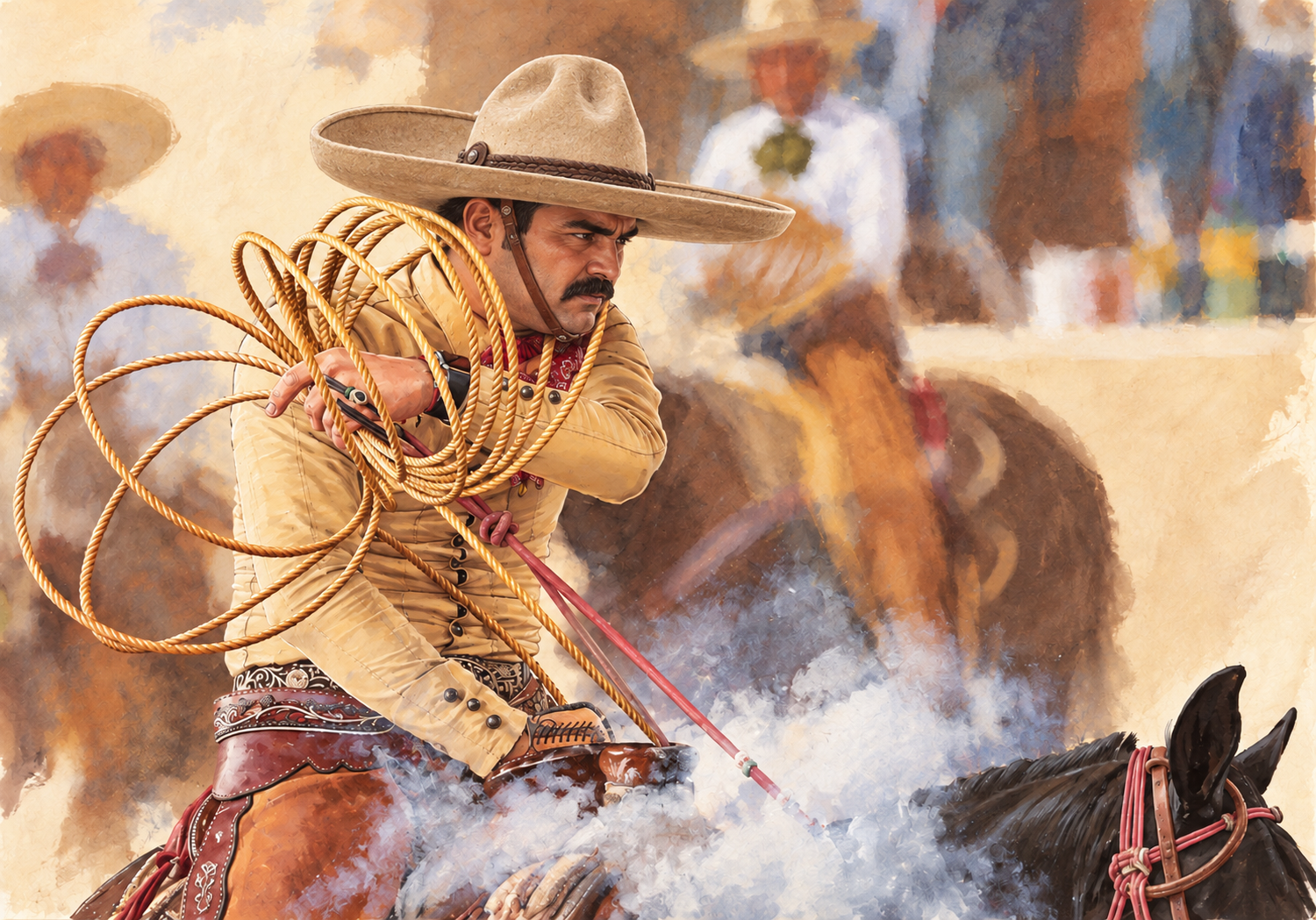
A charro ropes a mare’s hind legs and stops her run by letting the rope slide around the saddle horn—a technique called chorrear el lazo. The friction slows the mare to a stop.
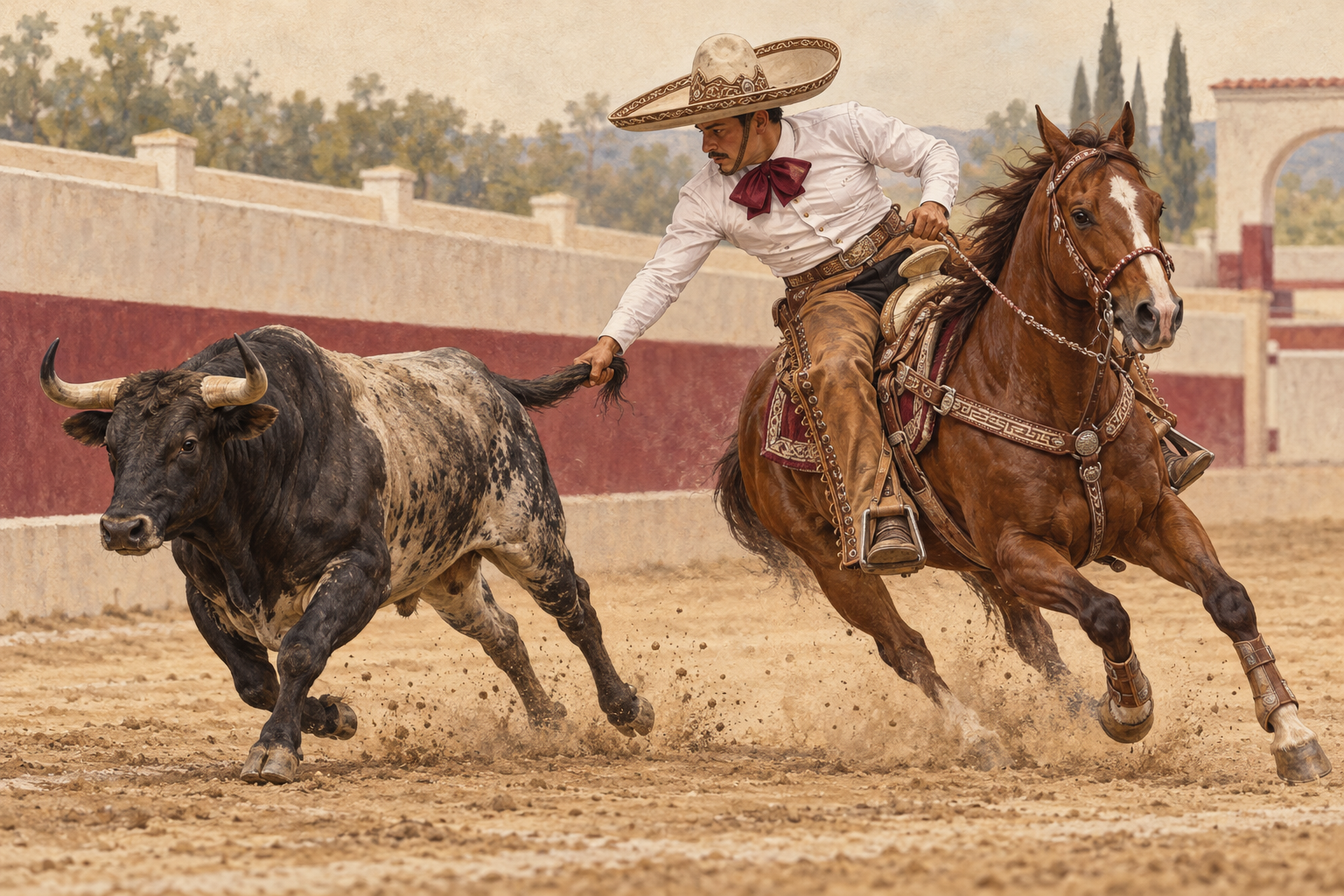
A mounted charro brings a bull down by its tail in the manga del lienzo, the arena’s straight lane.
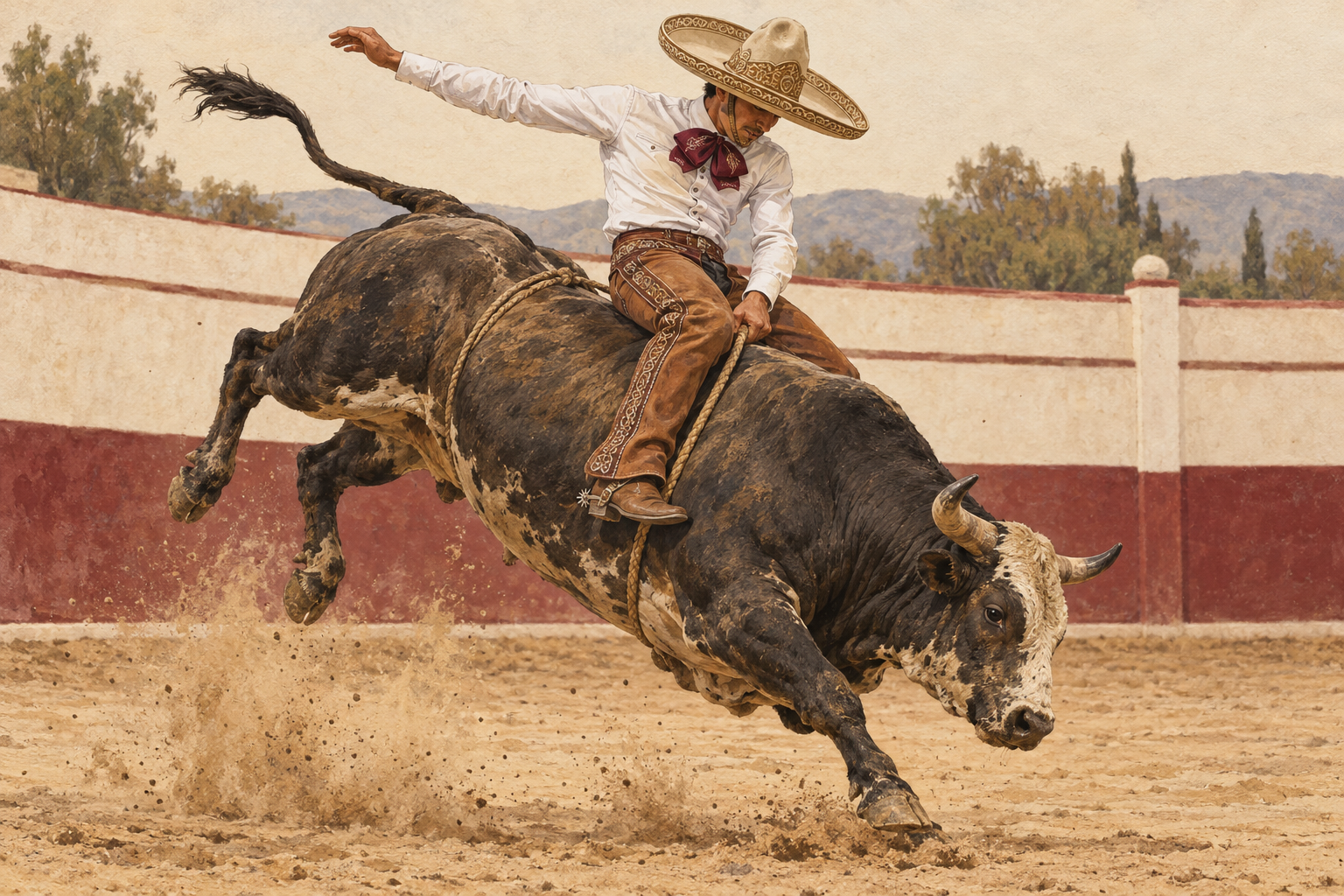
A charro rides a bucking bull.
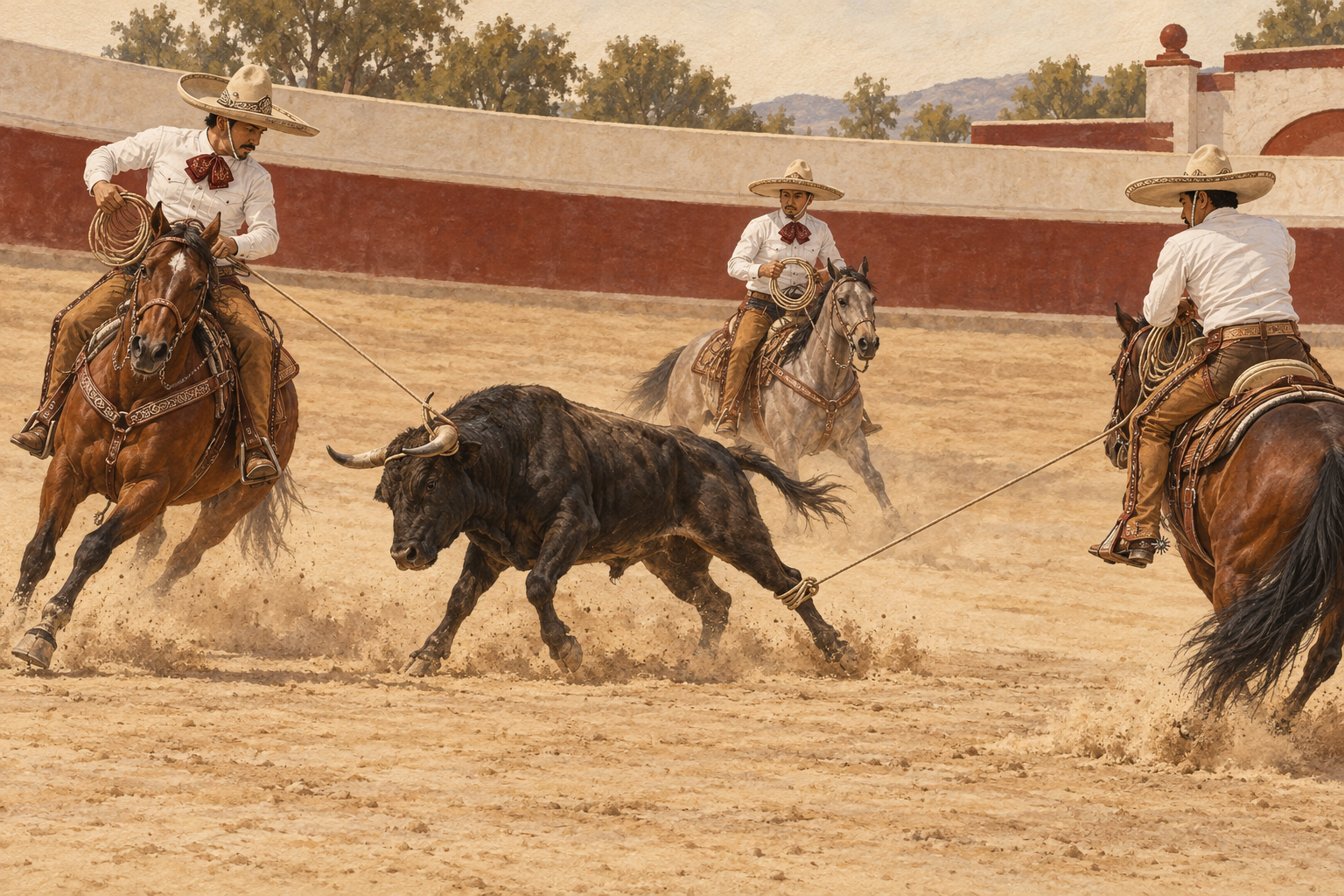
Three charros work together to rope a bull by the head and hind legs and bring it down.
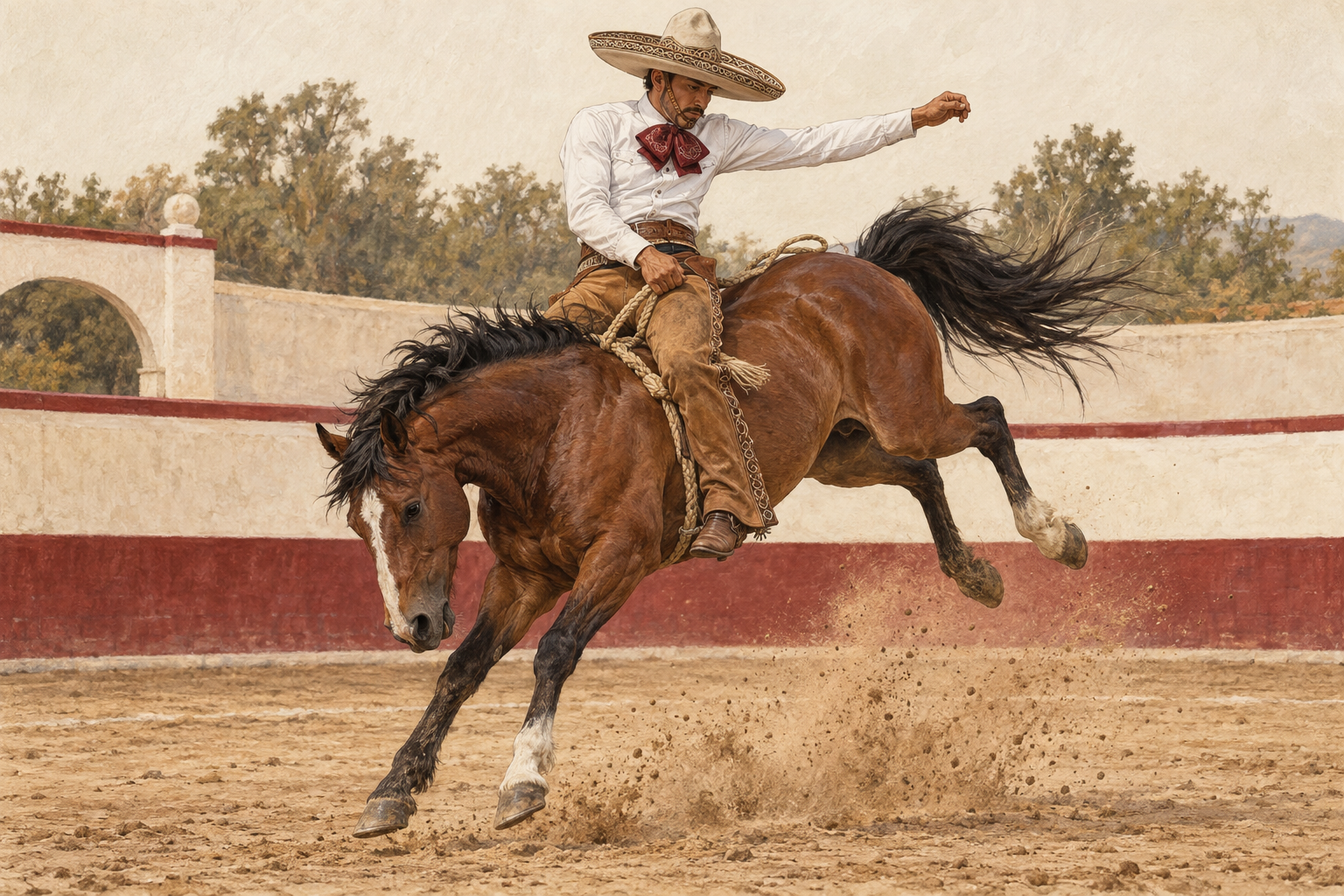
A charro rides a bucking mare.
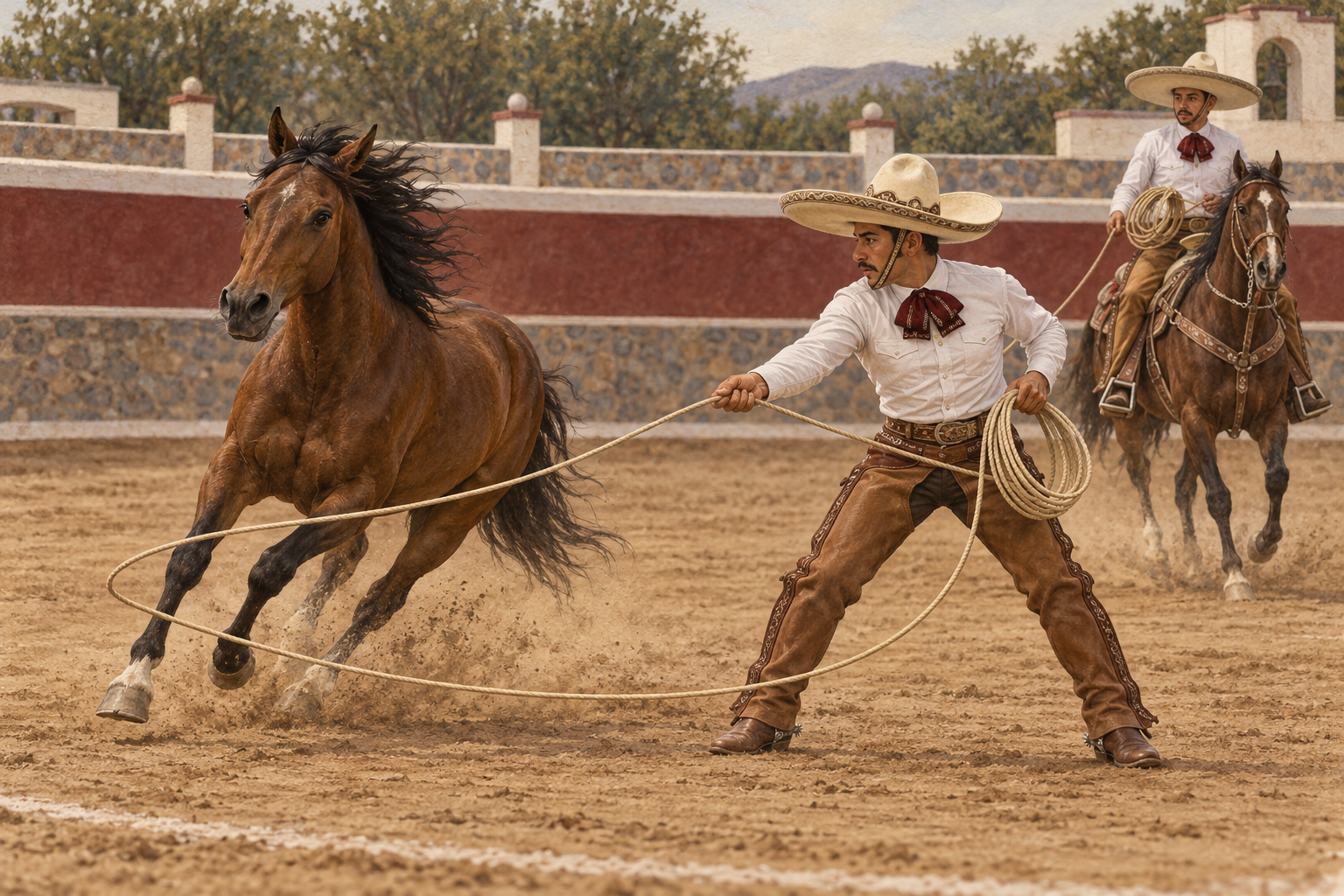
On foot, a charro ropes a running mare’s front legs and brings her down.
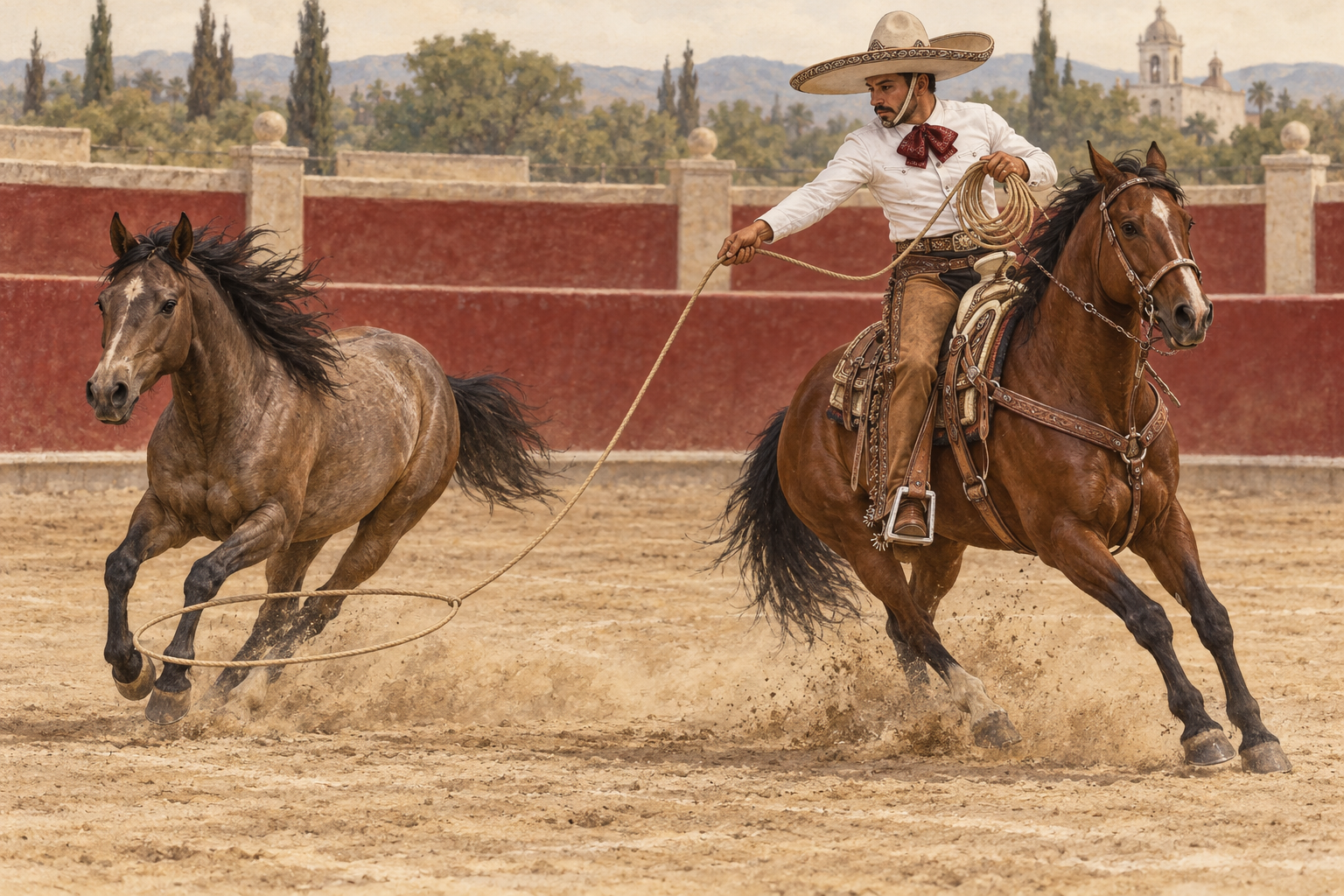
On horseback, a charro ropes a running mare’s front legs and brings her down.
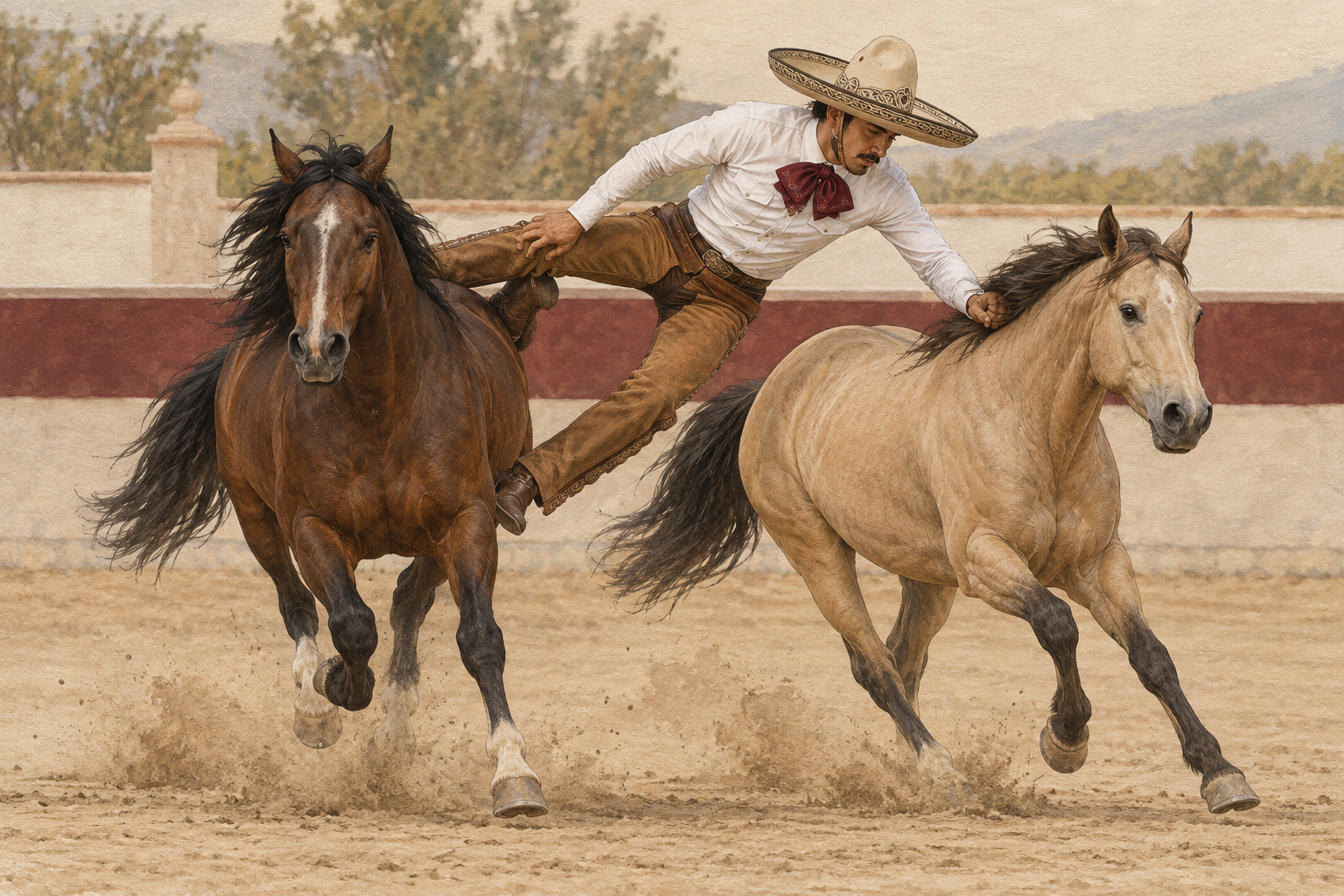
A rider leaps from a bareback horse onto a running, unbroken mare.
The lienzo charro combines the manga, the straight approach starting at the partidero, with the circular ruedo. The manga is at least 60 m long and 12 m wide; the ruedo is 40 m in diameter. The starting gate is at the beginning of the manga; the judges’ stand is at the 60 m boundary. The venue also includes livestock pens, riding chutes, a return lane and spectator stands.
Read the official rules (Spanish) · FMCH · 2026
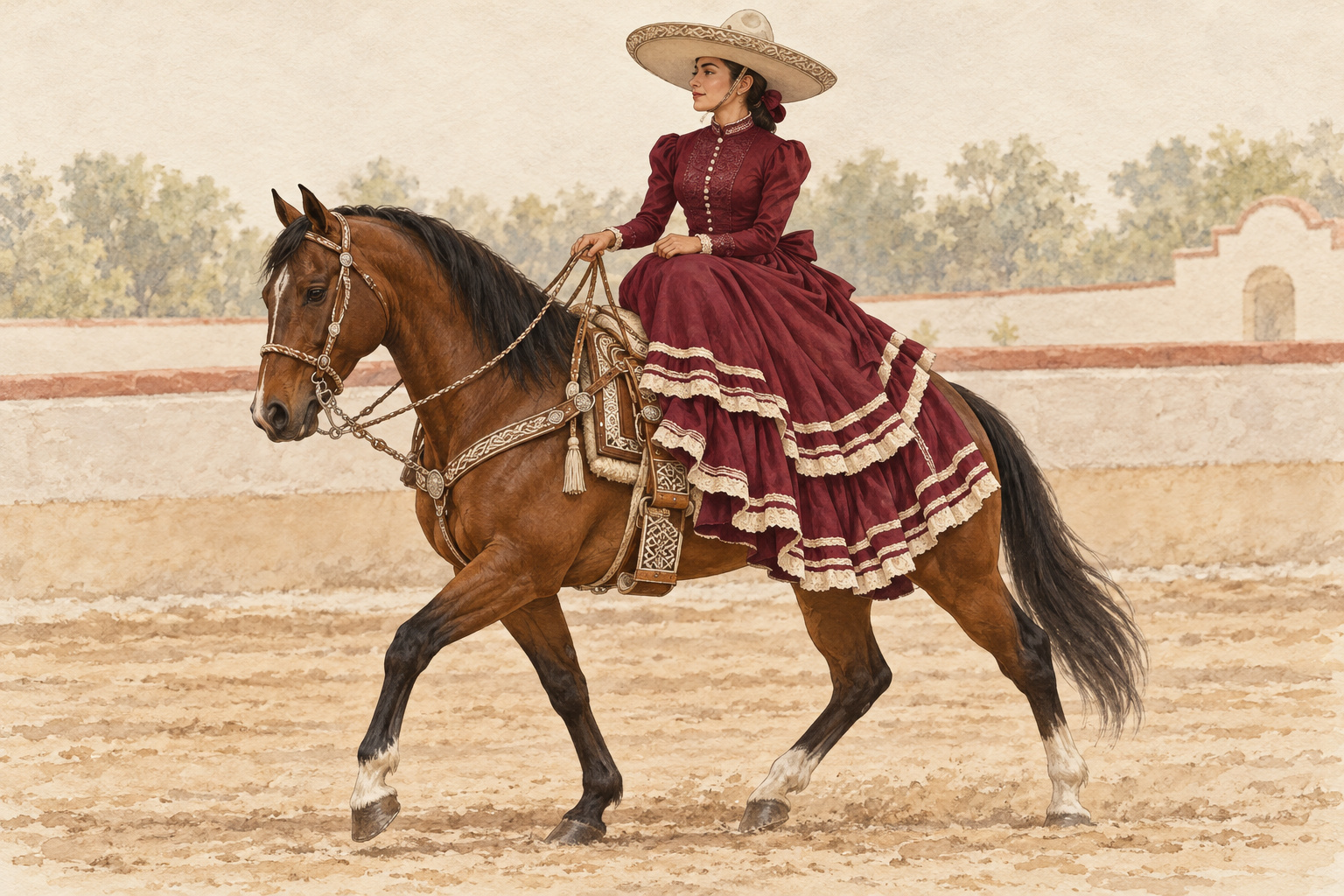
Escaramuza combines riding, coordination and tradition. Riders use sidesaddles and perform coordinated exercises in the circular arena.
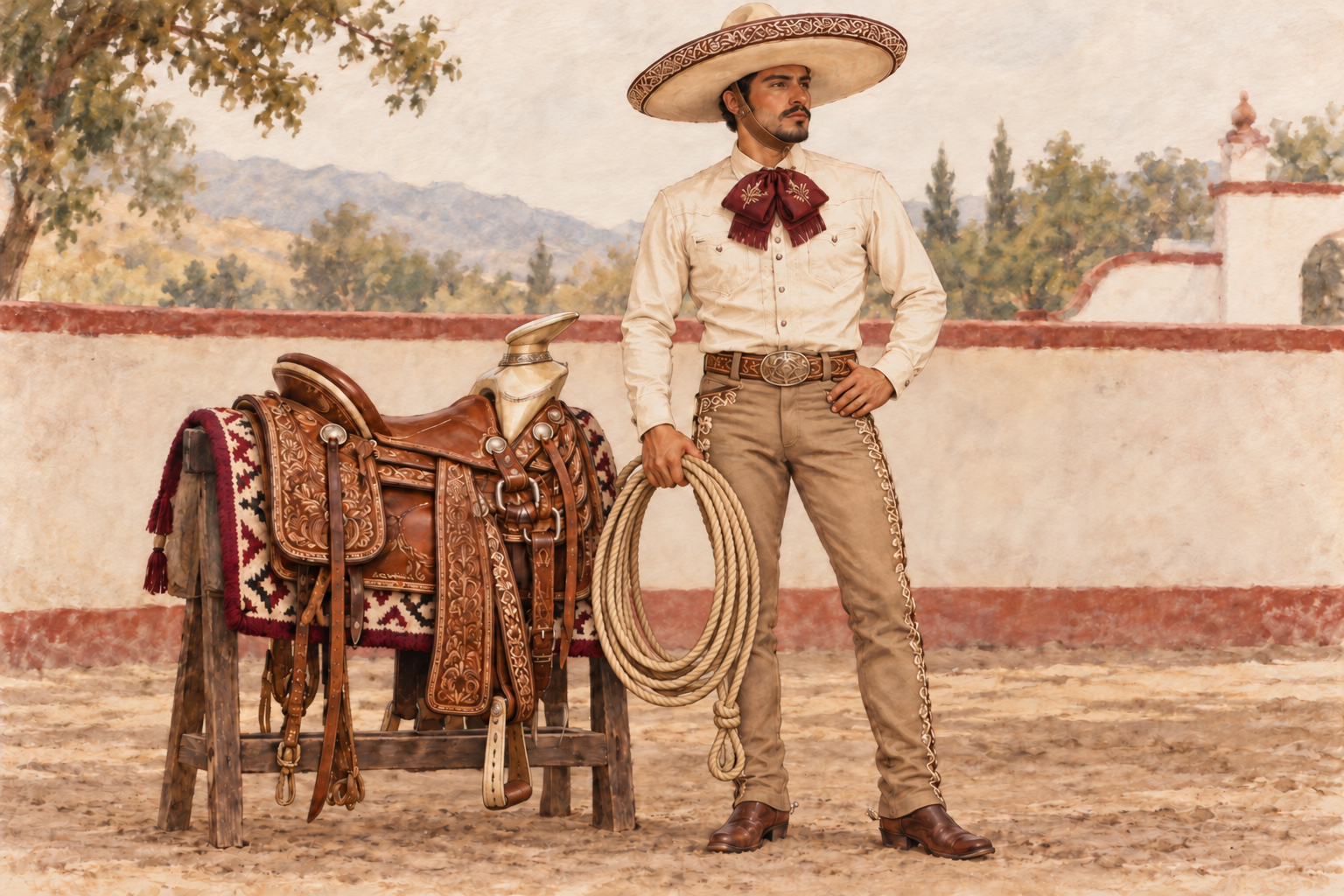
Understanding the charro also means understanding traditional clothing, horse tack and tools connected to ranch work.
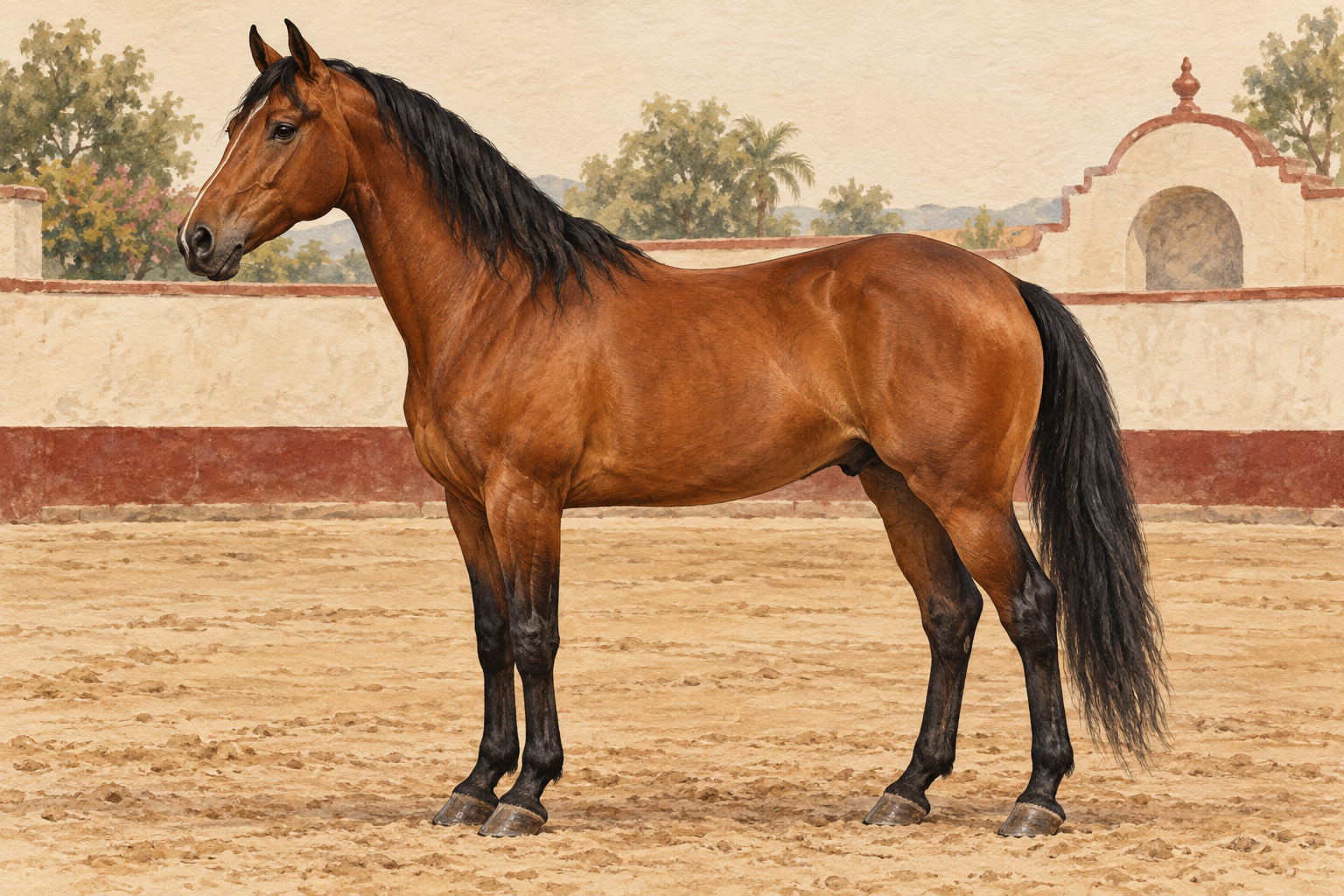
The horse connects the cattle work behind Charrería with the equestrian preparation used in today’s competitions.